

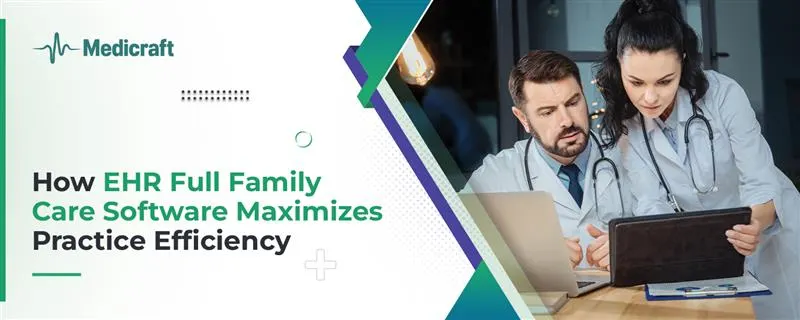
If you run a family practice, you already know this truth: no two days are simple. One moment you are checking a newborn, the next you are managing a parent’s blood pressure, and later you are helping a grandparent understand their medications.
Most family doctors aren’t overwhelmed by patient care, but rather by systems that don’t keep up. Old software, scattered records, and too many tools that turn everyday work into unnecessary stress.
EHR software helps you manage full-family care in one place. This reduces practice error, saves time, and helps you deliver better care without adding more work to your administrative staff.
The Difference Between Family Care and Individual Care
Family care is different, which means you are not treating patients in isolation. You are caring for people who share genetics, homes, habits, and sometimes the same insurance plan. When the family records are split across different places and disconnected, it’s harder to see the full picture. You miss patterns and spend more time searching instead of treating them.
A family-focused EHR software connects those dots and makes your work easier. With it, you see family history, medications, allergies, and visits without digging through separate charts all day.
What a Family Medicine EHR Really Does
At its core, a family medicine EHR software keeps every patient connected, not just digitally, but clinically. Instead of having the treatment journey of every patient separately in a file, the software enables you to categorize each family together. This helps you understand how one family member’s health affects another, which matters when tracking hereditary conditions, recurring infections, or long-term care plans.
The software gives you the right information when you need it and allows you to recognize patterns and genetic issues in families. This directly influences your diagnosis and how you treat your patients.
Why Old Systems Make Everything Harder
Family doctors often experience burnout when they have to deal with a lot of paperwork daily after attending to their patient care. When systems aren’t built for families, practices deal with the following:
- Separate charts that are not seamlessly integrated with each other
- Too many phone calls and messages to manage
- Manual scheduling for siblings and parents
- Billing confusion with shared insurance
All this takes so much time that it could have been used to focus more on the patient's treatment.
What Changes When You Shift to EHR Software
Care Feels More Connected
In family care, patients don’t exist in isolation. A child’s symptoms may be connected to a sibling’s condition. Having access to all the members of the medical history helps family doctors trace patterns across the family and identify if the sickness is genetics.
Instead of going through paperwork or depending on memory, providers have the right information. This also helps providers make better decisions and saves valuable time during appointments.
Fewer Human Errors
Human error often happens when systems are messy or information is scattered. Shared medication lists, allergy alerts, and real-time updates help prevent small mistakes from becoming serious problems.
Medical billing software also handles tasks like reminders, form updates, and documentation prompts, giving your administrative staff more time to ensure your patients have a satisfying experience.
Easy to Follow Up
Parents don’t want to spend time logging into different portals and apps in order to manage their household’s care. They want one simple place where they can see the medical history of every family member.
Family EHR software allows parents to book appointments, view test results, send messages, and manage care for themselves and their children without confusion. This ease reduces frustration and saves time, especially for busy families.
How a Good EHR Software Affects Your Daily Workflow
A well-designed EHR software helps the entire practice move in sync. Front desk staff, nurses, and providers all see the same up-to-date information. This reduces confusion and repetitive questions. Appointment reminders cut down the number of times patients do not show up for their appointments.
Secure messaging replaces long phone calls and voicemail chains. Some systems even highlight health trends across families, which help providers think ahead instead of reacting late. The result is a calmer, more organized workday for everyone.
Final Thought
EHR software designed for full-family care brings clarity to every medical issue, reduces stress, and gives your administrative staff the time to attend properly to your patients. And for a very busy practice, this can make all the difference.
Medicraft is that “one EHR software” all family care doctors need to streamline their practice. Our software offers all the features you need and practice management support that shape the future of healthcare providers and practices.
Frequently Asked Questions
Family practices can improve coordination between providers and staff by using a centralized system. A single platform where clinical and administrative teams have access to updated patient information. When family medicine practices switch to integrated EHR, they reduce communication gaps and prevent duplicate work. Further, they get everyone involved in care delivery while leading an efficient revenue cycle journey.
Family doctors should evaluate whether an EHR supports their unique workflow. The system should include multi-generational care, appointment management, documentation, patient communication, and reporting needs. The right system is the one that is easy for staff to adopt, reduce unnecessary tasks, and provide flexibility as the practice grows without creating additional administrative challenges.
Medicraft helps family practices streamline clinical and administrative workflows through organized patient records, scheduling support, communication tools, and practice management features. By bringing essential processes together, Medicraft helps providers reduce operational complexity, improve team coordination, and spend more time focusing on delivering quality patient care.
Yes, Medicraft is suitable for small and growing family practices. It is designed to support practices at different stages of growth. It is a software solution that simplifies daily operations and makes efficiency better. Whether you are managing a smaller patient base or expanding services, Medicraft organizes care delivery and helps maintain a smooth experience for providers and patients.
Technology reduces administrative pressure by automating repetitive tasks, organizing patient information, and minimizing manual processes. With the right technology, family practices reduce operational hurdles, build meaningful patient interactions, and prevent unnecessary burnout. Reliable EHR creates an efficient environment for family practices, and Medicraft helps providers reach there.
Still have questions?
Contact Us