


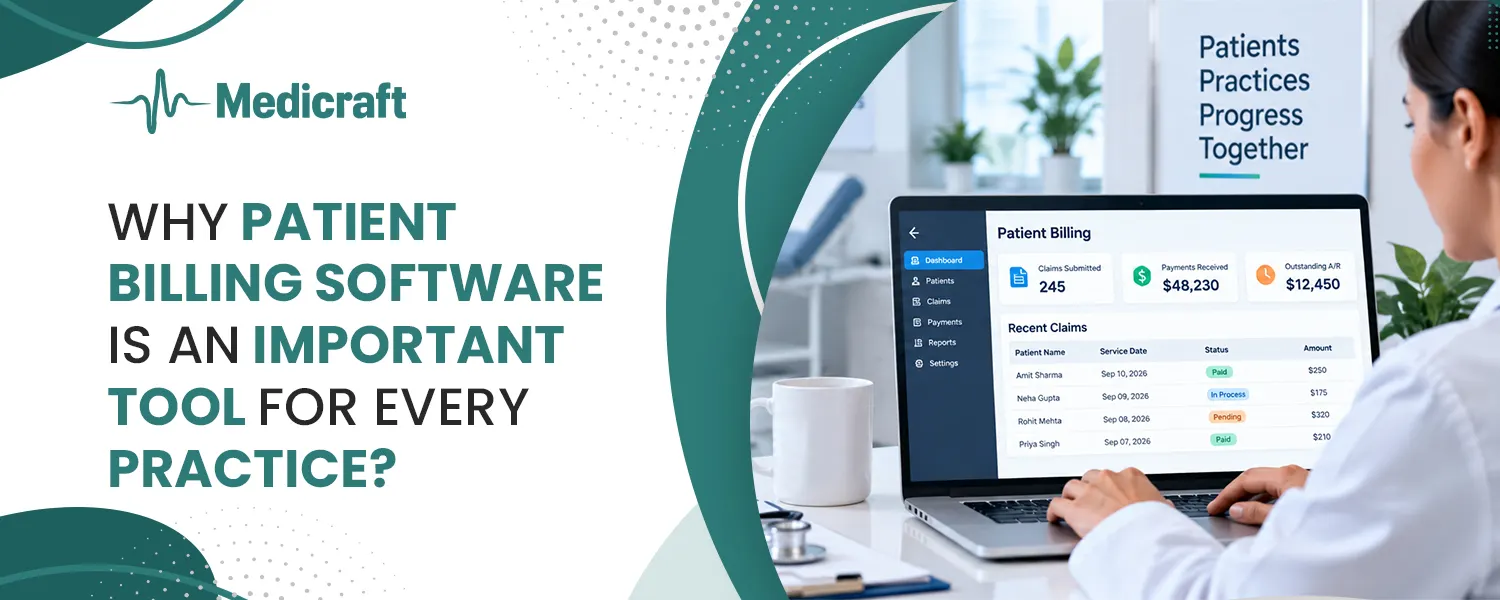
Billing is one of the processes most healthcare practices handle every day to maintain steady cash flow and support revenue growth. Explaining a charge over the phone for the third time this week.
Patient billing software was designed to handle the process without making any mistakes, and many practices are still working without it or using a tool that is outdated and does not do the job well.
Good billing software is not meant to remove your billing staff from the process, but to identify mistakes in your billing before it is submitted to the insurance company.
What Does Patient Billing Software Do?
Patient billing software handles the entire cycle from patient information and patient insurance verification to payment tracking and follow-ups, without your staff doing everything manually. It reviews every detail, so bills can be submitted correctly and approved for the first time.
Most software also sends reminders on its own, which stops your staff from constantly being in a stressful position. This means your administrative staff does not have to start calling to ask patients about their overdue balance.
Why Does Manual Billing Cost Practice More?
On paper, manual billing looks like the best option and is very manageable. This often feels right until a wrong code is used during the billing process, or a payment is paid to the wrong account.
Many healthcare practices do not always notice these mistakes until the insurance company denies the claim.
Manual processes also take a lot of hours from your billing staff, which could have been used to provide patients with the best medical care.
How Patient Billing Software Identifies Errors Before They Cost You?
Patient billing software identifies mistakes in your billing process from the very beginning. It achieves this by flagging codes that do not match the treatment, recognizing a missing insurance detail, or an incomplete patient record before the claim is submitted to the insurance companies.
This is very important because when a mistake is identified, it only takes a few seconds to correct but missing it can turn into claim denial and spending hours trying to find the root cause.
What Matters When Choosing a Billing Software?
Medical billing software does not function the same way. Therefore, it is important to know what your practice needs before choosing one. Features like automated reminders, patient insurance verification, and integration with the practice management tool are very important.
Also, review how the software handles partial payments and patient payment plans. This is because most patients do not pay their treatment balance in one shot anymore, and you need software that is designed to create a payment installment for patients.
What is The Importance of Patient Billing Software in Revenue Growth?
Patient billing software is a very important tool that dictates how fast and consistently a practice gets paid. Hospital billing software plays the same role for practices by identifying billing errors before submission, making claims processing faster, and ensuring better reimbursement.
When practices get this right, they know exactly how their revenue cycle works and when reimbursement will be paid.
How Patient Billing Software Changes the Patient's Experience?
Patient billing software not only ensures healthcare practices get reimbursement at the right time, but they also make patients feel better and build trust after they've left the appointment. For example: when patients receive a bill that they do not understand or receive their bill three weeks after their treatment with zero explanation, it makes them very confused.
Good software prepares a clear patient statement and an easy way to pay their bills online from the comfort of their homes. This simple process makes patient payment faster and reduces the time your front desk spends calling patients every week.
In Conclusion
Using the right software is very important for healthcare practices that want a streamlined billing process, but most of them often assume switching from one software to another might affect their practice.
The truth is, the switching process is very smooth, especially if you partner with an expert and your staff will be trained on how to use the new software.
Medicraft is a medical billing software designed to solve the problems of healthcare practice by automating repetitive tasks, identifying mistakes early, and giving practices a current view of their revenue.
Frequently Asked Questions
It is very easy to switch to medical billing software, especially when it has a seamless onboarding process. Your staff will be trained for a few days to understand how the software functions. Patient data are properly protected and also migrated carefully, so nothing is lost during the entire process.
Yes, most patient billing software is designed to integrate seamlessly with existing practice management or EHR platforms. It is often done by experts to ensure there is no double data entry while keeping patient and billing details the same across every tool your practice uses for its day-to-day operation.
Yes, most medical billing software is designed to help healthcare providers check if patients have the right insurance in seconds while streamlining the patient's billing process. The software connects every detail, so a patient's balance reflects what insurance is already covered and what they have to pay.
Billing software has features such as automated reminders, online payment options, and payment plans that make it very simple for patients to pay their bills. It also provides clearer statements, which reduce disputes and naturally speed up the whole collection process.
When smaller practices switch to using the right billing software, they often see a lot of benefits and also reduce the workload of their billing staff. Billing software automates repetitive tasks, which makes the process faster and avoids manual follow-ups that cause errors that could have been avoided.
Still have questions?
Contact Us